
“Like an international bathroom tile expo — except we exhibit bands instead”
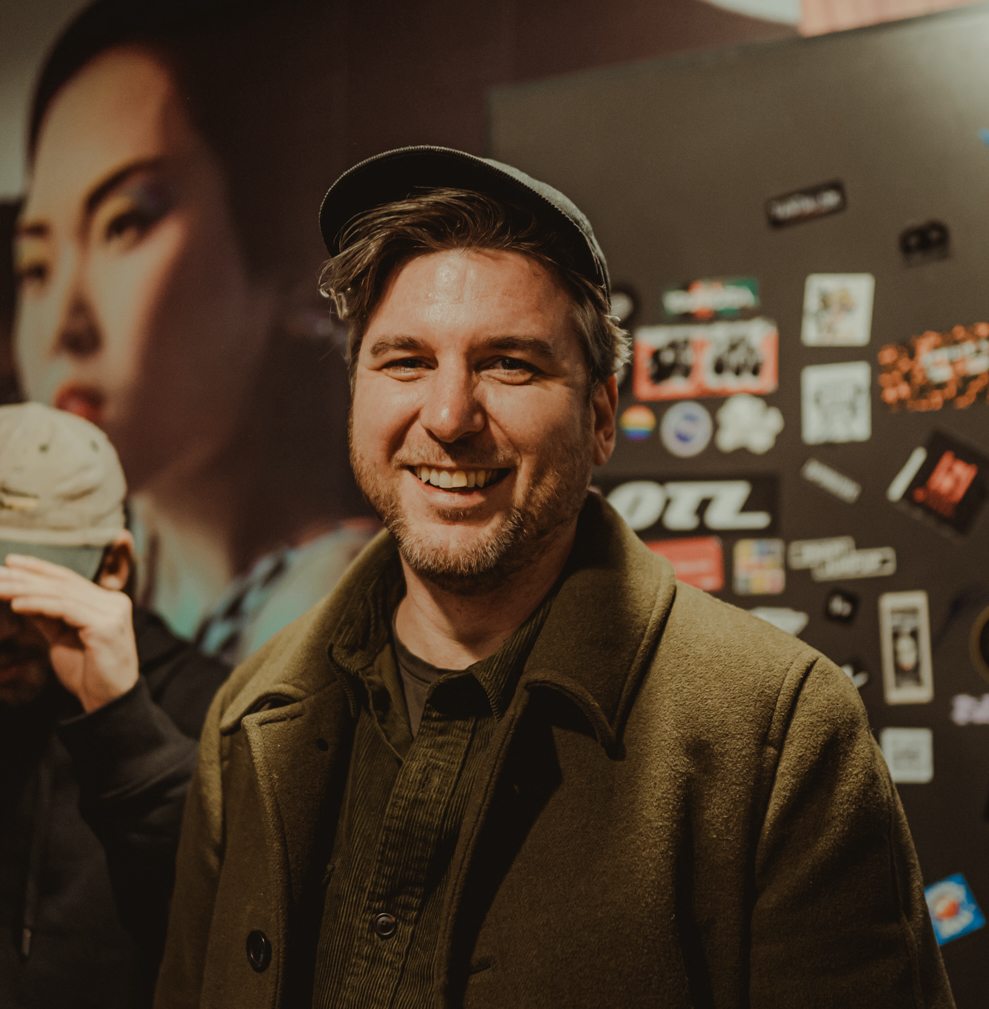
Dénes Pécsi-Szabó is a music manager, founder of the Up Music Budapest music management agency, co-founder of the ten-year-old Budapest Showcase Hub, and a board member of the Association of Music Managers. The Hungarian bands he represents — including Makrohang, Duckshell, and the recently Fonogram Award-winning Jazzbois — have performed not only on major Hungarian stages but also across several continents and at numerous international showcase festivals. Dénes helps talented Hungarian artists become internationally recognized and respected. He sees his work as both a cultural mission and a form of national image-building.
Why did you found the Budapest Showcase Hub (BuSH), and what motivated you?
Primarily, we wanted to make the Hungarian music scene more visible.
What is the significance of showcase festivals?
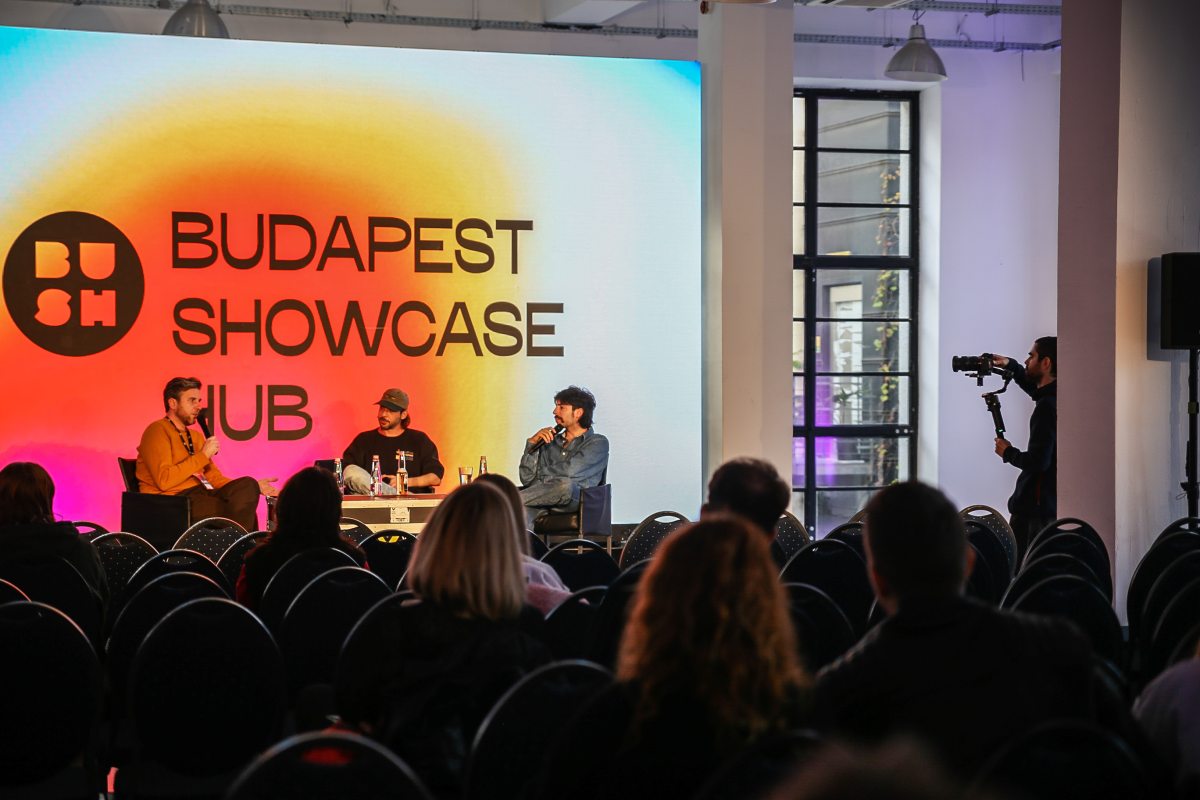
A showcase festival is an event where emerging but already promising bands — artists who have achieved visible results through their talent and have built both professional recognition and an audience in their home countries — can introduce themselves on the international stage and gain opportunities to increase their visibility.
You should imagine it like an international bathroom tile exhibition, except instead of tiles, we exhibit bands — and in doing so, we build the country’s image. For bands, performing at showcase festivals cannot be the ultimate career goal; it is merely a tool for progressing further and achieving their ambitions.
How can the effectiveness of this tool be measured?
If a band is invited to perform abroad after a showcase appearance, or if one of their recordings is licensed for a film, that’s a direct result. Of course, in many cases, this only happens after years of work, multiple releases, and several showcase performances — at that point, it’s hard to pinpoint which specific event caused the success, because the effects accumulate.
Europe’s largest showcase festival, Eurosonic, tracks how many booking offers participating bands receive after their performances through its European Festival Exchange program. It’s not easy to monitor this comprehensively, but we’re trying as well.
What kinds of success can showcase festival appearances lead to?
There are three kinds of success.
The first is immediate and straightforward: after a performance, the artist receives a personal or online inquiry inviting them to another festival.
The second occurs when I, as a music industry manager, meet another industry professional at a showcase conference, recommend one of the bands I represent because I think they would fit well at the other person’s festival, and we strike a deal.
The third type of success comes after multiple showcase appearances, when an artist finally breaks through. Even I usually start paying attention to a band after seeing them for the third or fourth time — for example, when they appear repeatedly on social media, are recommended by colleagues whose taste I trust, or get surfaced by Spotify.
As organizers of BuSH, how do you help Hungarian bands gain international recognition?
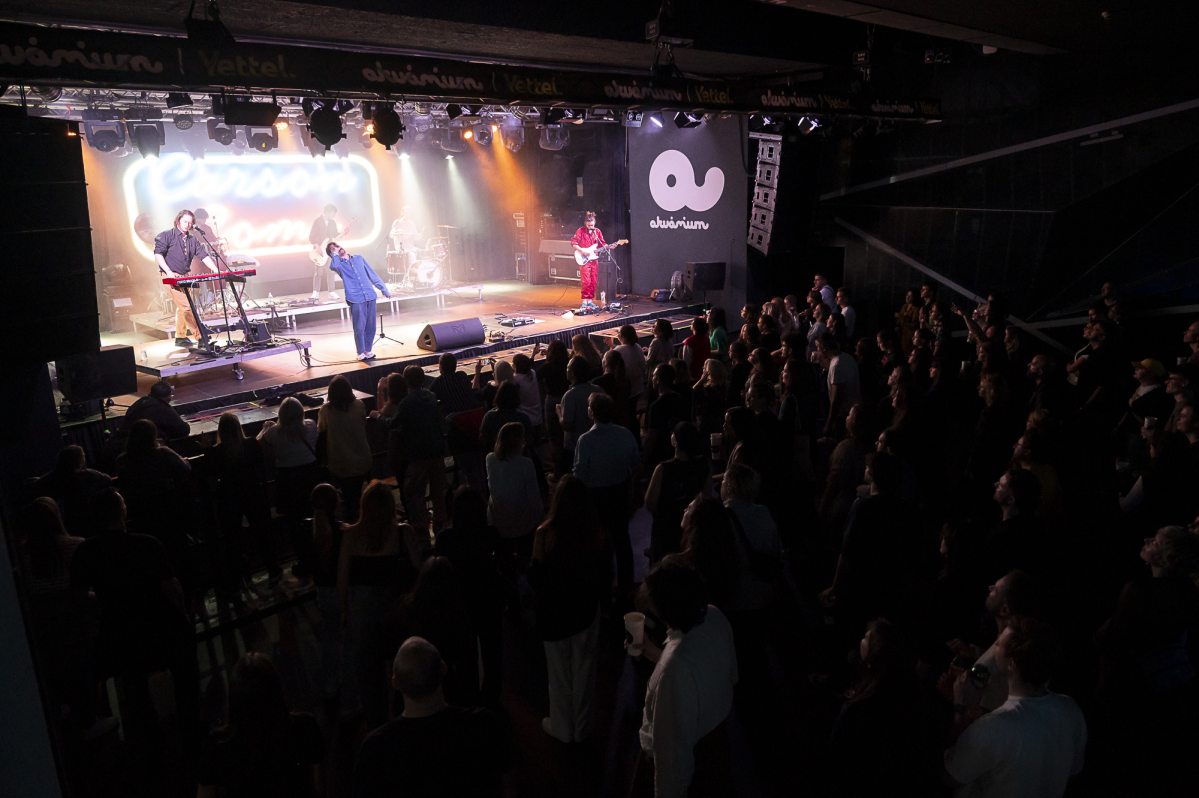
As a classic showcase festival, we invite relevant international industry professionals who can both share knowledge with local professionals and artists and potentially act as buyers.
For example, we might invite an agent, introduce them to a band, and hope that the band will later be invited to perform in the countries where that agent works. BuSH is a Europe-focused festival, concentrating mainly on Eastern Europe and Western Europe.
We could also become an American- or Asia-focused festival, but so far we haven’t received enough funding to afford that. Bringing someone from New York or Tokyo is considerably more expensive than bringing someone from Berlin or London.
What motivation helps you do this work as effectively as possible?
The awareness that what we do is a cultural mission.
Our mission is to strengthen the presence of Hungarian music on the international market. The way we do this is by organizing not just a Hungarian festival, but an Eastern European one. The reason is simple: we couldn’t create a full weekend event featuring only Hungarian talent for the international industry.
The Hungarian market is small, whereas Eastern Europe — spanning 14 countries — is enormous, and these markets are still more untapped than Western Europe.
How do you ensure that you showcase the most current and export-ready emerging artists?
This is where we differ from all other showcase festivals: we don’t operate with a traditional selection system.
It’s not just one or two people deciding which Polish, Czech, Romanian, Serbian, Slovenian, or Hungarian bands perform at BuSH. We have an email list with hundreds of music industry professionals from our Eastern European partner countries.
Every year, we email our Polish, Czech, Romanian, Serbian, and Estonian partners — the people who know their local markets best — and ask them who they believe are the most export-ready emerging artists and bands in their countries at that moment.
Based on their recommendations, we compile a list, which is an enormous help when putting together the program.
What tangible results do you see from your cultural mission?
When we founded BuSH ten years ago, our primary goal was to stimulate circulation between Eastern European music markets.
At that time, bands mainly dreamed about performing in Berlin, London, or Paris — not Budapest, Prague, or Warsaw. Touring within Eastern Europe was not common at all, but we’ve changed that over the past decade.
Today, strong collaborations exist between Eastern European bands and festivals. Many partner festivals come to BuSH every year and invite bands they discovered there — not to showcase festivals anymore, but to market festivals.
Beyond BuSH itself, Polish bands now come to Hungary to perform at paid concerts, and Hungarian bands do the same in Poland. Ten years ago, that was rare.
Our secondary goal — which I always emphasize — was to open up Eastern European markets primarily toward Western Europe and the wider world. That’s also continuously happening. Take Jazzbois, for example: they are now known in Western Europe as well.
That’s pure nation branding.
What kind of song can succeed internationally?
There are many good formulas, and every kind of music is different, so I can’t give a universal truth. But three conditions definitely need to be met: it has to be unique, of outstanding quality, and have a clearly identifiable character.
How is Hungary doing in terms of exportable artists?
We have plenty of talent. I think we would have even more export-ready artists if music education trained more open-minded and informed musicians.
Hungary has fantastic music education. Teachers provide high-level instrumental and theoretical training, but this knowledge doesn’t always seem to support improvisation and the development of original ideas.
I see many bands that play perfectly and are incredibly professional, but whose music still isn’t exciting enough for me to tell our foreign partners: “Listen to this — you can only hear this from this Hungarian band.”
At the same time, I increasingly encounter exciting Hungarian artists who face a difficult situation because different kinds of music dominate the domestic market. As a result, many have to choose between domestic stardom and international success.
If a project is truly outstanding, we’ll find it.
Right now, by far the most exciting and internationally successful Hungarian band is Jazzbois, which is selling out venues across Europe. Last year they performed at the Montreux Jazz Festival, and this year they’ll appear at the world’s largest jazz festival, the Montreal Jazz Festival in Canada.
If anything qualifies as world-class success for a Hungarian band, this does.
How do you work with the HoTS – Hungarian oncoming Tunes program office, and what are your experiences?
Very positive ones. Serious professional work is happening there.
Since its founding, HOTS has been a partner of the Budapest Showcase Hub, and over the years its performance has steadily improved. Their own programs are excellent, and so is their cooperation with BuSH. As a professional partner, HOTS contributes delegates and program ideas to the conference.
Of course, these collaborations could be strengthened further, but HOTS operates with relatively modest funding by international standards. Still, considering the circumstances, they’re doing very good work — and with more funding, they could do even more.
How do you view the evolution of cultural competition between countries?
Competition in the music industry is becoming increasingly intense, which makes export offices more important than ever.
Every country wants its own emerging bands to succeed abroad. Export offices compete with one another financially as well.
Bands I manage have already received invitations to perform in Transylvania, other Eastern European countries, and even India, but in some cases they ultimately couldn’t go because another country’s export office told the organizers: “Choose our band instead — we’ll cover their fee,” essentially providing a free act.
Since Hungarian offices aren’t financially strong enough to send local bands abroad at their own expense, foreign competitors have an advantage.
We could do a lot with greater financial resources.
More money means more success.
This article was originally published on kultura.hu.