We’re Taking Hard and Heavy Metal to Every Corner of the World
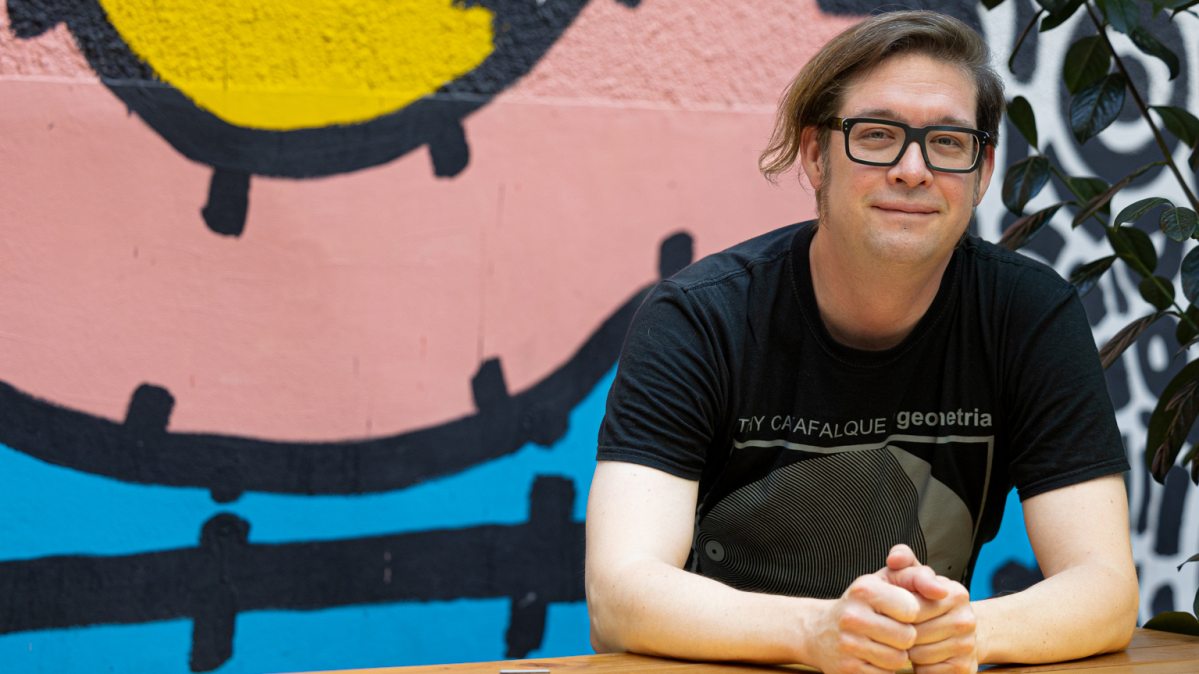
This autumn, HOTS – Hungarian Oncoming Tunes will once again organize the Heavy Genre Discovery event, which supports the successful international expansion of Hungarian bands working in hard and heavy metal genres. Last year’s host was Varga Balázs, founder of Tixa and Fekete Zaj Fesztivál, as well as manager of the internationally acclaimed band Thy Catafalque. Alongside Heavy Genre Discovery, we also spoke with him about Fekete Zaj and Thy Catafalque.
Who is Heavy Genre Discovery for?
It’s a full-day, genre-focused event aimed primarily at musicians and managers working within various hard and heavy genres. More specifically, it’s for those who already have some sort of export strategy — people whose goals include touring abroad, performing at international festivals, or collaborating with international labels and agencies.
Who are the speakers and participants at the event?
An international lineup of professionals representing every possible area of the industry. This includes people organizing prestigious international festivals, working at global booking agencies, management companies, record labels, tour and PR companies, or venues representing subcultural values. It’s a very strong team.
What does the day’s program consist of?
There are several panel discussions exploring different topics, each followed by audience Q&A sessions. There’s also a listening session where participating musicians can submit songs in advance, which are then played and evaluated live by the professionals present.
In addition, there’s a speed meeting section where musicians and managers can speak with the attending professionals in short two- or three-minute rotations.
As the only Hungarian participant, you won the EU grant called EMEE Mission as manager of Thy Catafalque, which is embarking on a Latin American tour across seven or eight countries this October. Tell us about that mission!
They selected one person each from fifteen or sixteen countries, and in February they took us to Mexico City. Besides the enormous amount of knowledge we gained, the experience also had tremendous networking power because I was able to connect with both European and Latin American professionals.
For three days in Mexico, there were full-day presentations introducing us to the specifics of the South American market. They gave us insight into the major players, important concert agencies, record labels, digital distributors, and PR agencies.
They also arranged meetings with these people, during which they explained the strategies for entering their market and told us which European methods we should avoid using there. They helped us understand the interests, mentality, and platforms used by Mexican and Latin American audiences. We learned how local festival organizers choose bands and gained insight into the dimensions of this region, which has enormous fan communities.
For me, this was incredibly timely knowledge acquisition because we really are heading to Latin America soon — in fact, we’ll start the tour with a Mexican festival.
Tell us about Thy Catafalque’s international success!
What’s important to know about Thy Catafalque is that for twenty years it was a one- or two-person studio project that never performed live.
Four years ago, my friend Adorján Balázs came up with the idea of somehow bringing Thy Catafalque’s music to the stage. At first, we only planned a single performance, which we organized within Fekete Zaj Festival. It went so well that the band’s leader, Kátai Tamás, became interested in live performances — cautiously, but genuinely.
Balázs and I became the band’s managers. We divide the responsibilities between us: I handle international relations, communication, financial and production matters, while Balázs focuses on internal management and developing band dynamics.
Thy Catafalque’s albums were first released through a Czech label and later a French one, and combined with the mystique created by the absence of live performances, this built a substantial fanbase around the band before we even stepped in.
Last year we organized a ten-date European tour entirely by ourselves, and since then we’ve played several European festivals.
Performing at France’s Hellfest was a completely cathartic experience for the band. Following that — alongside Hungarian concerts — we’re now preparing for shows in Romania, Serbia, and Belgium.
This year marks the 17th anniversary of the Fekete Zaj Festival you founded. What are your plans for this season?
Survival. (laughs)
I think that’s currently the primary goal for many festivals, because it has become very difficult to sell festival passes. People’s financial situations and interests have changed, and it’s no longer common for attendees to stay for the full duration of an event. At the same time, costs on the service side — technical equipment, venue rental, staff — keep rising.
We are a subcultural festival, so we can’t appeal to everyone. Because of that, we can’t really reach the attendance numbers required for growth — in fact, we’re fighting even for stability. But the festival gives us tremendous strength because it’s backed by a very strong volunteer base and volunteer crew.
The greatest value of Fekete Zaj is that it’s a community festival — and the word “community” here isn’t just empty branding. At a certain point, the staff openly shares with the audience how the festival operates, what challenges it faces, and how people can help if they want to.
We have a community support platform, volunteer initiatives, and for the past six years we’ve also had a social ticket program. This means that if one of our regular visitors falls into financial hardship, they can apply for a ticket that includes festival access, a camping spot, and meals — so even during difficult times, they don’t have to miss out on the festival experience.
There was even a visitor who attended one year using this support ticket, and the following year bought an extra pass and donated it through the same program.
That’s where the power of subcultural communities lies. We create a community people genuinely want to belong to. Some members of this circle start bands or book clubs in their free time — the community has long since outgrown the boundaries of the festival itself.
It now has a life of its own.
Photo: Zsigmond Csákvári / Kultúra.hu
This article was originally published on kultura.hu.