Zsüd: Thanks to HOTS, I Worked with Grammy-Winning Producers
Recently, two major events organized by the export office HoTS – Hungarian oncoming Tunes took place. One was SyncLab, where six songwriting teams worked from briefs provided by international music supervisors, writing and recording new songs every day. The other was SongLab, whose personalized workshops allowed Hungarian artists aiming for the international market to learn established practices from foreign producers — many of whom have worked with global stars. As a result, eight songs were created and finalized through collaboration with these producers.
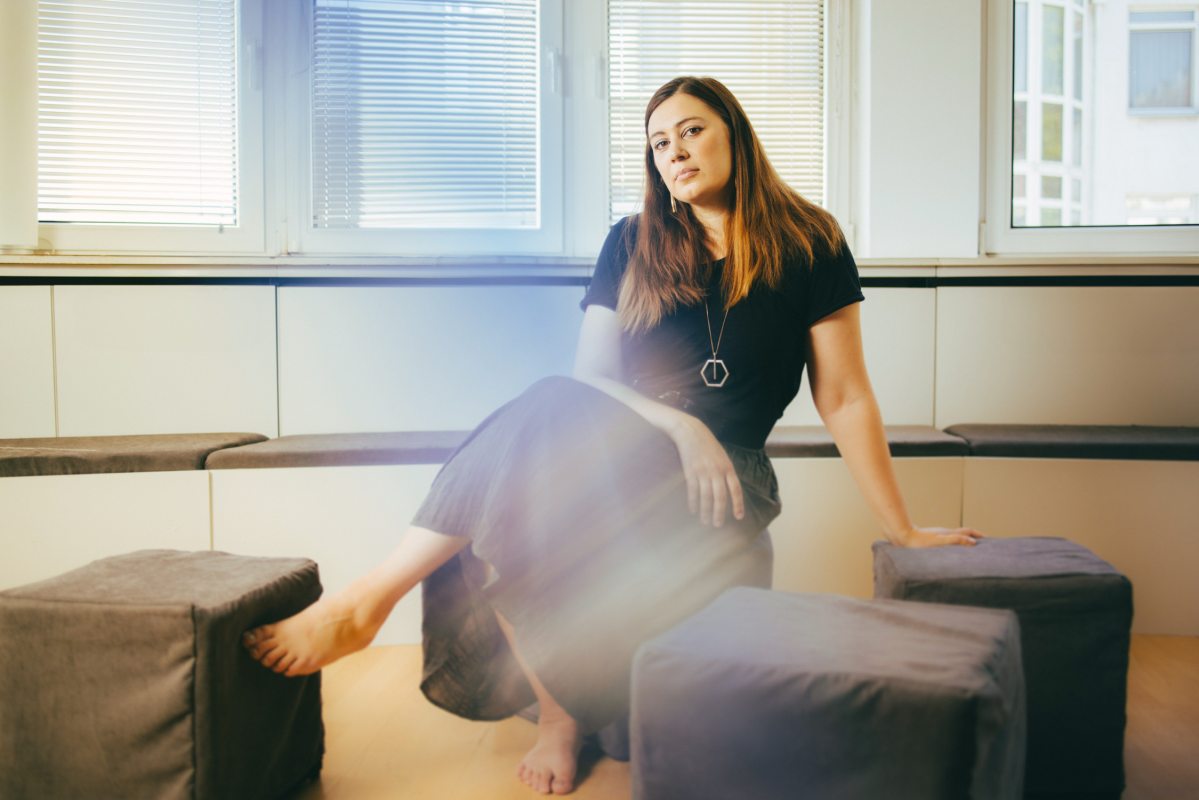
Vincze Judit, better known as Zsüd — singer, producer, songwriter, and co-owner, director, and instructor at imPro School — participated in this year’s SyncLab and had previously created music at SongLab as well. We spoke with her about her experiences with the projects and about productive creative work.
From a professional standpoint, what did participating in SyncLab bring you?
On the one hand, SyncLab was useful because the music supervisors introduced many new perspectives regarding how songs can be structured — things that creators don’t necessarily keep in mind on their own.
For example, if someone wants to get their music placed with sync agencies because they dream of hearing their work in applied music contexts such as films or TV series, it’s helpful to understand the criteria these professionals use when selecting music. A song, for instance, shouldn’t contain profanity; certain structural elements should be easy to edit; and the track should consciously convey one or even multiple specific moods.
These considerations don’t have to limit artistic vision, but they can definitely help later on.
Which international professionals did you work with, and how did those collaborations affect you creatively?
On the first day of SyncLab, I worked with Elina Moellenberg from JvM Music, who was incredibly kind and deeply engaged in the collaborative process. At one point she literally sat down beside us and actively participated in the creation itself. It was obvious that she genuinely cared about the final result, and she helped tremendously by observing the process not only from a creator’s perspective but also from the wider viewpoint of an outside listener.
Here I should also mention SongLab — I participated twice, once with Steve Dub from The Chemical Brothers, and once with John Foyle, who has worked with Gorillaz and Blur. It was exciting and educational to sit beside these producers and watch exactly what they did and how they worked.
How have SongLab and SyncLab supported your export activities? How has your musical project developed internationally through them?
Beyond SongLab and SyncLab themselves, I owe an incredible amount to HOTS, which organizes these programs — among other things, in terms of performance opportunities and professional recommendations.
There are countless performers in the world, and concert and festival organizers naturally find a project more interesting if it can demonstrate international collaborations and songs produced at an international standard.
What kinds of creative challenges did the two projects present you with?
During my first SongLab participation, what healed most were my “professional-social” anxieties. I usually work alone, and I felt extremely intimidated having to record vocals in a massive studio surrounded by other people.
What helped relieve the stress was that John was incredibly kind. It taught me an important lesson: a good producer isn’t just technically skilled — they’re also capable of handling human and performer-related situations well. For example, they can create a safe atmosphere where an artist feels comfortable enough to truly open up.
By the time I attended SongLab for the second time, I was much less nervous, so working with Steve Dub became genuinely fun.
How did overcoming those challenges and stressful situations expand your creative toolkit?
At the second SongLab, I collaborated with my colleague Kozmofobe, also known as Törőcsik Hanna. We experienced our creativity in an absolutely playful yet focused and goal-oriented way.
How did you continue intensifying your creativity during the projects in order to get the most out of yourself even within just four working hours?
You can’t skip practice. The more often you expose yourself to situations like these, the easier effective creation becomes, because high-pressure situations reveal how you react to things.
Of course, there are tricks for handling stress better. For me, one thing that usually helps — not only in music but in every life situation — is imagining the absolute worst-case scenario and making peace with it. Another helpful question is: what’s the smallest step I can take to make this song just a little bit better? Activity itself also helps dissolve stress.
At the beginning of the interview, you mentioned the importance of using creativity flexibly but also consciously and productively. How do you guide students at imPro School toward this mindset?
This philosophy permeates everything we do. For example, every exam assignment must be uploaded via Dropbox links with fixed deadlines — there’s no possibility of extending creative time.
That kind of structure provides a framework for scattered creative minds and helps people work more efficiently and with greater focus. Beyond that, we try to give people as many tools as possible so they can experience their creativity across the widest possible spectrum.
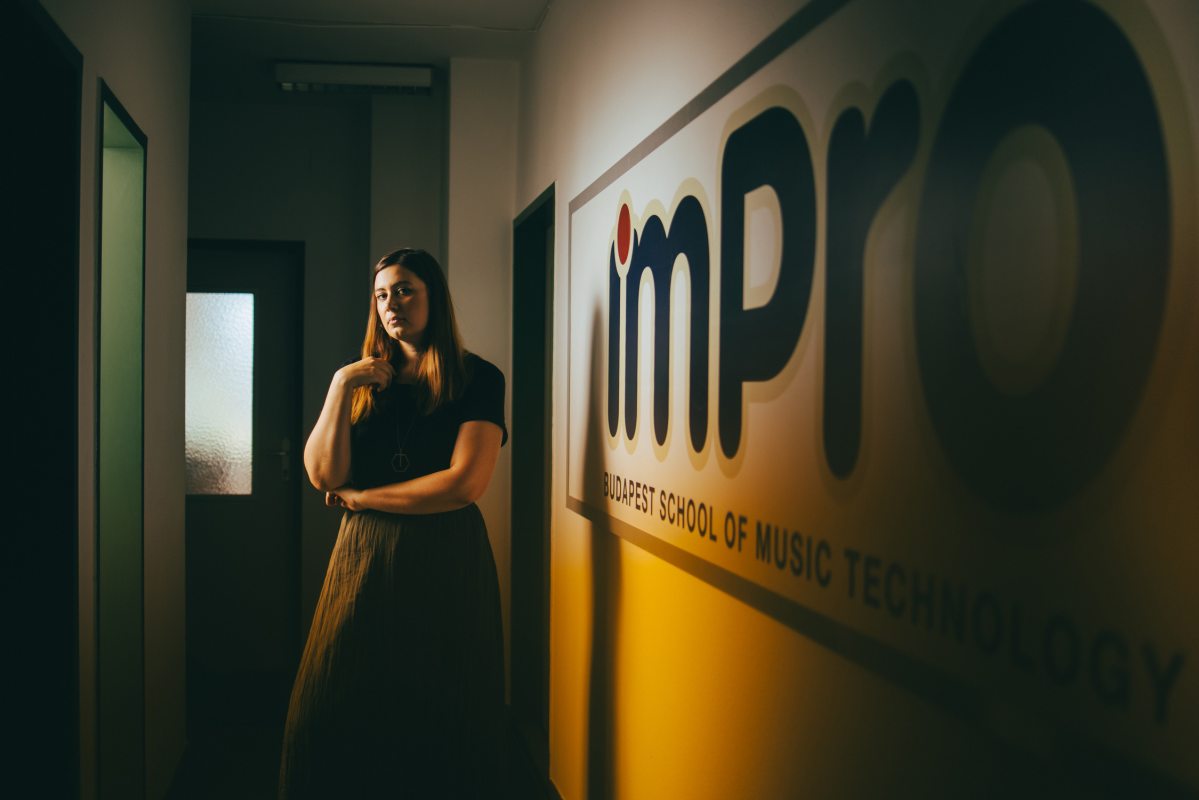
Tell us about the 15-year-old imPro School! What is the school’s purpose and essence?
We originally started with music production training, but our range has become much broader by now. Today, our programs also include songwriting, producer composition, Ableton Live performance, mixing, and music management training for artists.
Many people approach imPro in a modular way and complete two or three programs consecutively. We have a very strong alumni community full of active creators.
We don’t provide tools for satisfying the entertainment industry — we provide tools for artistic self-realization. It doesn’t matter whether someone creates only for personal emotional release, “for the drawer,” so to speak, or whether they want to commercially release their compositions.
Besides education, we also operate two studios, and through imPro Circle we are working on building an active professional community that extends beyond our graduates, allowing anyone to join.
Photos: Norbert Hartyányi / Kultúra.hu
This article was originally published on kultura.hu.